
Knowledge base
Frequently asked questions
A EURO pallet is manufactured to a defined standard and carries the required licensed markings.
A EURO-size pallet has the same dimensions and may have the same declared load capacity, but it is a standard pallet without EUR/UIC or EPAL markings.
The right choice depends mainly on the recipient’s requirements and how the pallet will be used in transport and storage.
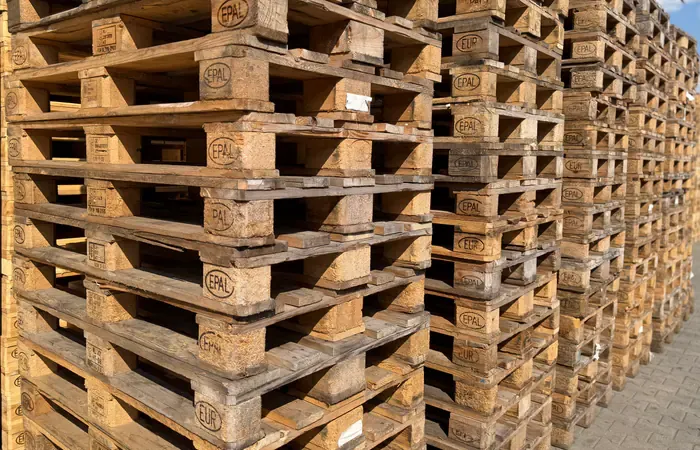
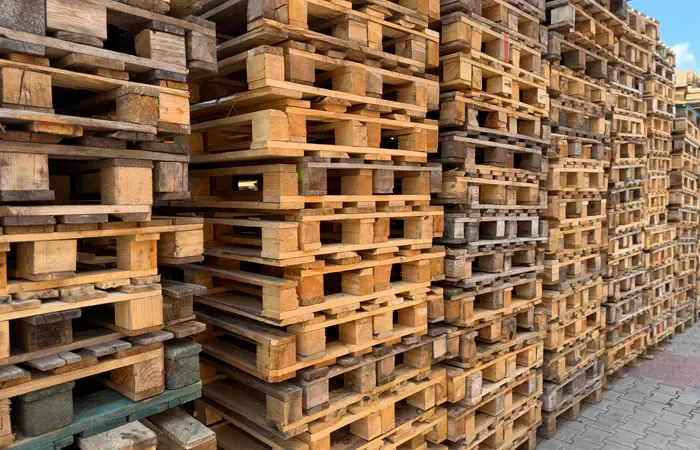
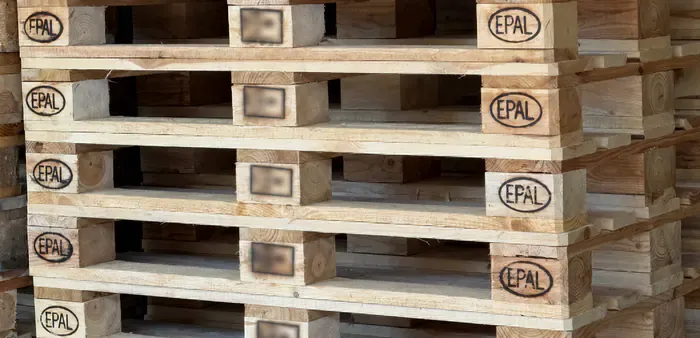
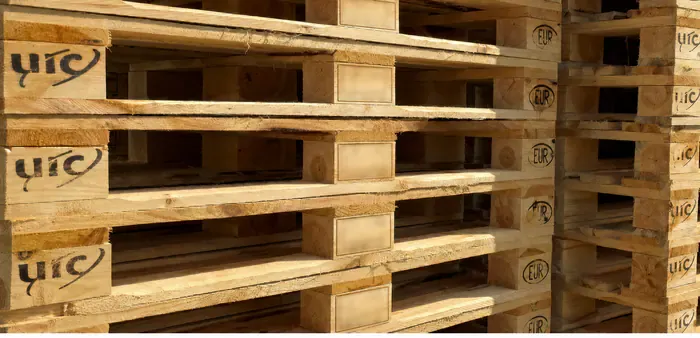
EPAL and UIC pallets are licensed 1200 × 800 mm EURO pallets manufactured to defined quality standards.
Both types have the same dimensions and basic construction.
New EPAL and UIC pallets are kiln-dried and HT phytosanitary treated in accordance with ISPM 15.
They differ mainly in their licensing systems and markings: EPAL pallets carry EPAL marks, while UIC pallets carry UIC and EUR marks.
The appropriate system depends on the recipient’s requirements and the rules of its pallet pool.
At HGV, used EURO pallets are divided into two main grades: Grade 1, commonly called Class A, and Grade 2, commonly called Class B.
Grade 1 pallets are light-coloured, clean and usually only lightly used, which makes them a frequent choice for the food sector.
Grade 2 includes older, darker pallets with more visible signs of use that remain complete, serviceable and suitable for continued circulation.
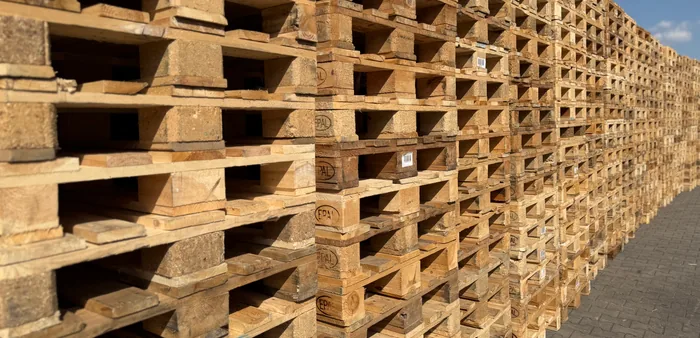
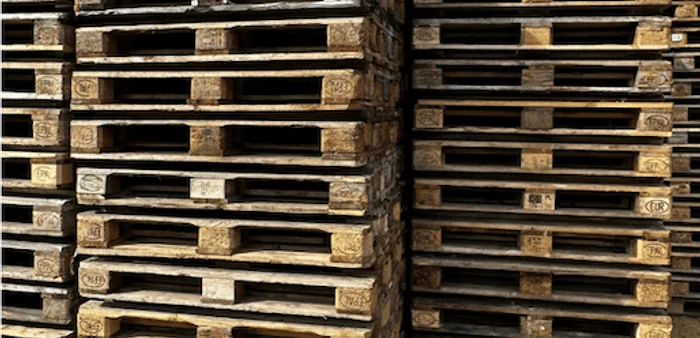
With straight stacking, every pallet faces the same direction and forms an even stack.
This arrangement is often required when pallets are collected directly by a robot or automated production line.
With nested stacking, the first pallet forms the base, the next one is inverted and subsequent pallets are alternately inserted into the available spaces.
Nested stacking reduces stack height, allowing significantly more pallets to fit in one vehicle.
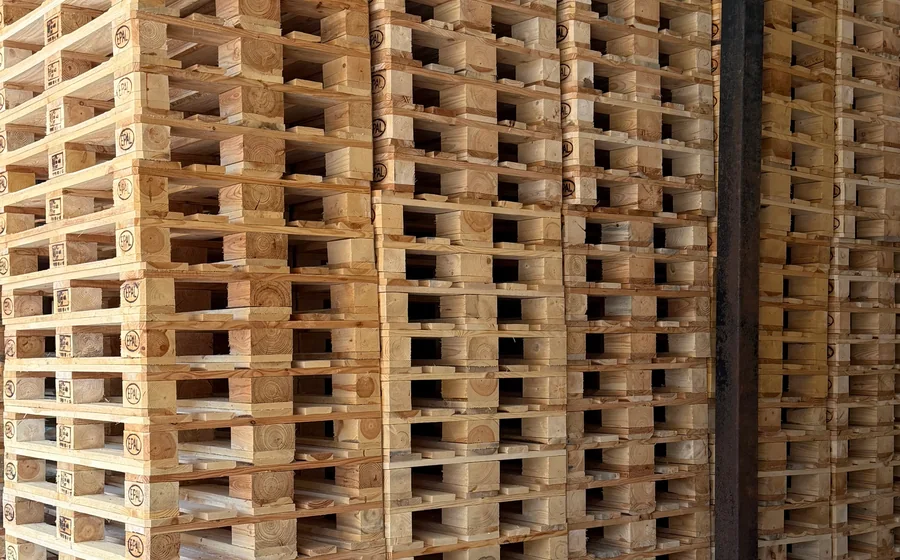
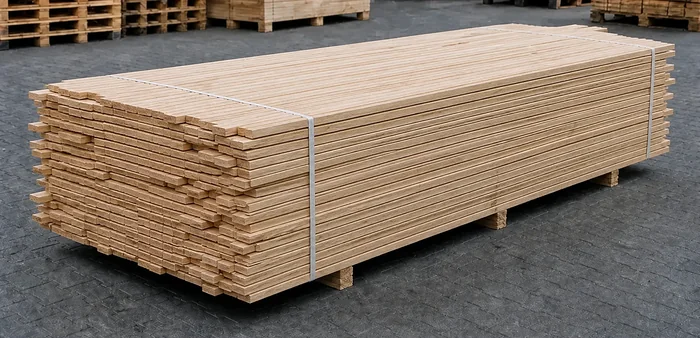
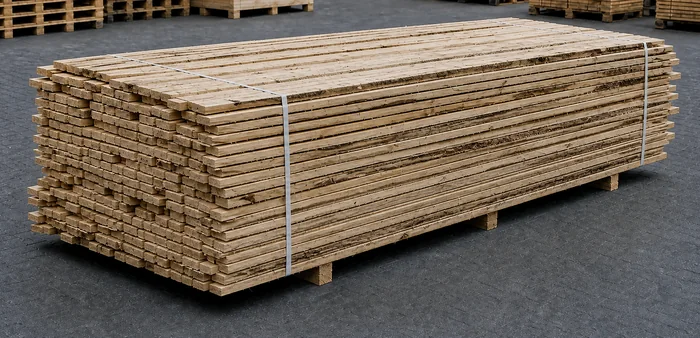
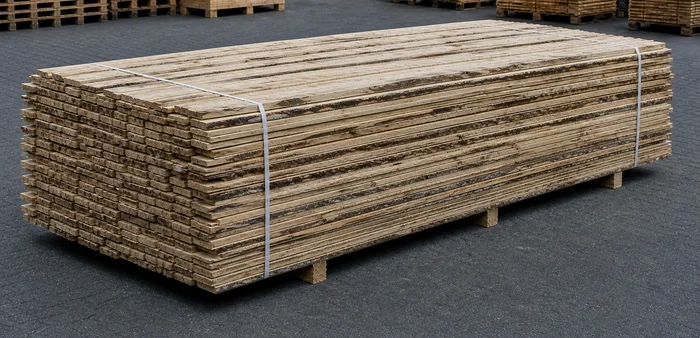
At HGV, boards are divided into three grades, mainly according to appearance and the amount of bark or waney edge.
Grade 1 consists of light, even boards without bark or waney edges. At HGV, this material is also usually dried to a moisture content not exceeding 19%.
Grade 2 includes light boards that may contain some bark or waney edges.
Grade 3 consists of darker boards with more bark and waney edge, used where appearance is less important.
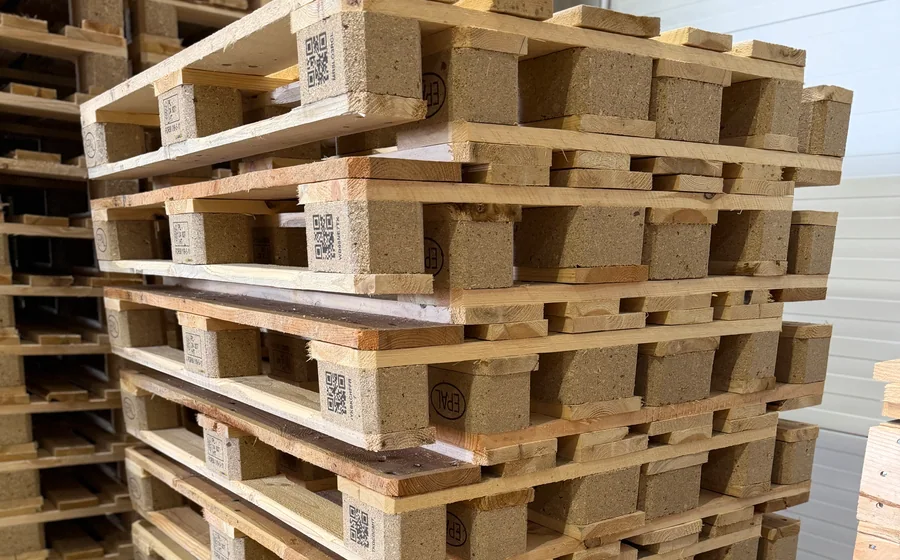
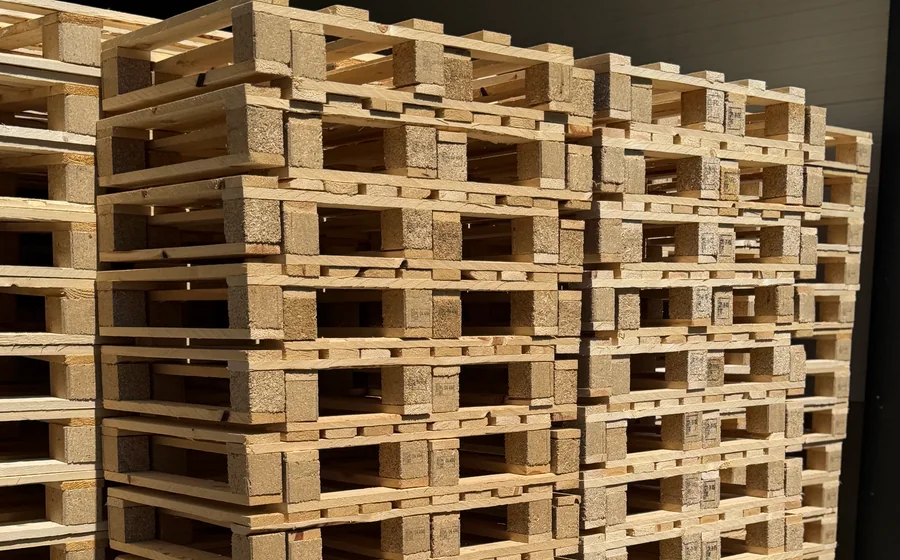
Pressed-wood blocks are made from compressed wood particles. They have a uniform structure, repeatable dimensions and stable parameters.
Solid-wood blocks retain natural grain and can differ slightly in appearance and properties.
The block material alone does not determine pallet capacity. If the components meet the relevant specification, pressed-wood and solid-wood blocks can provide the same declared capacity. Final capacity depends on the complete construction, material quality and load distribution.
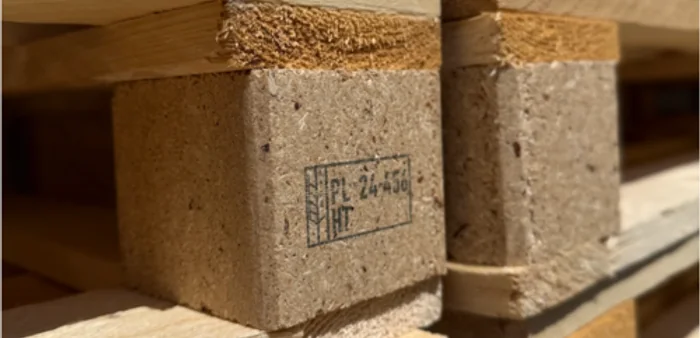
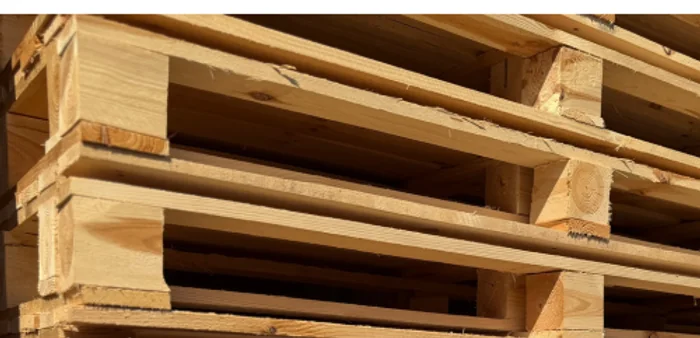
The process commonly called fumigation at HGV is HT phytosanitary treatment designed to eliminate timber pests. Pallets are heated in a dedicated kiln and the timber must reach at least 56°C for a minimum of 30 minutes.
After treatment, pallets receive the IPPC mark, confirming compliance with ISPM 15 for export to countries that require it, particularly outside the European Union.
Phytosanitary treatment does not mean that the pallet has been fully dried to a moisture content of 22% or less. It is protected against pests but may still retain its natural high moisture content.
Full pallet drying takes much longer, usually around 2–3 days, and removes excess water from the timber.
Both processes can be combined to obtain an HT-treated pallet with moisture content not exceeding 22%.
A new, dry EURO pallet normally weighs around 22–25 kg.
A used EURO pallet, whether Grade 1 or Grade 2, weighs around 24 kg.
Actual weight may vary slightly, particularly due to timber moisture content.
A used 1200 × 800 mm one-way pallet weighs approximately 15 kg on average.
The weight of custom pallets is determined individually during quotation or order preparation.
For example, a 2000 × 1200 mm pallet may weigh from around 20 to 50 kg depending on construction, board thickness and the number and type of blocks.
At HGV, we distinguish between pallets made from timber with natural moisture content and dried pallets.
For pallets made from timber at natural moisture content, the level is typically around 30% or higher and can vary with the material and storage conditions.
Dried pallets have moisture content not exceeding 22%. A specific requirement can be stated in the enquiry.
Pallet load capacity is determined from its construction and intended use.
We consider the weight and type of goods, load distribution and whether the pallet will stand on a floor, be stacked or stored on racking.
We then select board thickness and layout, as well as block number and type, before defining the declared capacity for the specific pallet.
Yes. We manufacture custom wooden pallets matched to a particular product, load and method of transport or storage.
We produce small pallets from around 400 × 400 mm as well as large structures up to 6000 × 2000 mm. Dimensions, board layout and thickness, block type and required capacity are selected for the application.
We can also manufacture custom transport crates, pallet boxes and other wooden packaging from customer documentation or a design developed from their requirements.
After accepting the order, the sales adviser creates a production job and the production manager plans the work and required boards, beams and blocks. If suitable material is not in stock, we arrange its delivery.
Components are then cut to size on an optimising saw. Prepared sets of boards and blocks move to production, where pallets are assembled on dedicated tables or pallet nailing machines.
If drying or HT phytosanitary treatment is required, completed pallets are loaded into the kiln directly after production.
After all processes are complete, pallets are stored under cover or inside until collection. They are normally prepared for transport and delivered within the agreed schedule.
We mainly mark pallets with specialist industrial printers. Standard heat branding has been discontinued, although it can be provided by special arrangement.
Printing can include a PPWR batch identifier and, after HT phytosanitary treatment, the appropriate IPPC mark.
By individual arrangement, we can also print a customer logo, product marking or other agreed text.
HGV holds IPPC/ISPM 15 certification and EUR/UIC licences for the production and repair of EUR pallets. Current documents can be downloaded from the Certificates, licences and PPWR page.
The process starts with a telephone or email enquiry. Our sales adviser reviews the customer’s needs and helps select pallets that meet both quality and budget expectations.
Once the quotation and conditions are accepted, the order enters fulfilment. If production is required, the adviser issues the relevant production job.
For both new and used pallets, the assigned adviser organises transport, confirms the date and books the delivery slot. We issue the invoice after delivery.
Lead time depends mainly on the pallet type and current availability.
Standard pallets are usually delivered within 2–4 working days. New custom pallets that require production normally take around 5–15 working days.
We always try to accommodate the customer’s requested delivery date.
Payment conditions and terms are agreed individually with each customer.
The sales adviser determines them based on a payment-risk assessment, which usually takes only a few minutes.
For regular long-term cooperation, our standard payment term is 14 days.
The number depends on pallet dimensions, construction and stacking method.
A vehicle can carry up to approximately 756 EURO pallets when nested or around 594 when stacked straight.
For 1200 × 800 mm one-way pallets, the corresponding figures are around 868 and 660. Their thinner boards allow higher stacks.
Custom pallet quantities are calculated individually. For example, one vehicle may carry around 270 pallets sized 2400 × 1200 mm or around 378 pallets sized 1800 × 800 mm.
We deliver throughout Poland and to customers across Europe.
We deliver to European Union countries and non-EU destinations such as Switzerland. Transport cost and terms are agreed according to destination and order size.
We arrange transport for the size and type of order using vans, rigid trucks, standard or MEGA trailers and 7.7 + 7.7 m road trains.
Each shipment is planned to maximise load space and reduce transport cost per pallet.
Personal collection is also available after agreeing the date and location with a sales adviser.
Yes. We purchase and repair used wooden pallets.
For an initial quotation, send photographs, approximate quantity, dimensions and collection location. We use this information to assess pallet type and condition and propose the cooperation terms.
We then agree whether the customer will deliver the pallets or HGV will collect them. Final purchase settlement or repair scope is confirmed after inspection.